
When passengers remember a memorable flight, they usually think about the meal, the presentation, or the service they received from the cabin crew. What they rarely think about is the equipment that made that experience possible.
Hidden behind the curtain is one of aviation’s most overlooked categories: Crew & Galley Equipment. Within just a few square meters, service trolleys, drawers, inserts, and jugs help cabin crew deliver hundreds of meals, organize beverages, and manage waste under tight operational timelines.
For airlines, a constant challenge is getting more out of an aircraft’s predefined galley space.
The hidden workplace behind every flight
Aircraft galleys are remarkably standardized. Trolley dimensions, storage interfaces, and galley layouts are largely defined by the aircraft itself, leaving relatively little room for structural change. At the same time, passenger expectations continue to evolve with greater menu choice, premium dining concepts, and more personalized onboard service.
As a result, innovation has shifted inward. Rather than redesigning the galley itself, airlines are looking for smarter ways to organize, store, and access everything inside it. Crew & Galley Equipment is no longer just a collection of products. It’s an operational system that supports every stage of cabin service.
Why airlines should design workflows, not just products
Every airline purchases Crew & Galley Equipment, but some focus on individual products while others start with an operational objective such as improving service consistency, increasing passenger choice, or using the existing galley more effectively.

The strongest innovations happen when equipment is treated as part of a connected workflow rather than a collection of individual products. Instead of optimizing one component at a time, airlines have an opportunity to improve how catering teams prepare service on the ground and how cabin crew deliver it in the air.
At deSter, a dedicated team of design engineers and product managers works closely with airlines to translate operational challenges into practical innovations. Their focus is simple: make equipment more intuitive, workflows more efficient, and service easier for cabin crew.
“Crew & Galley Equipment should never be viewed as a collection of standalone products. Every trolley, drawer, glass rack, and waste solution plays a role in the same workflow. Our designs help these elements work together seamlessly, allowing cabin crew to deliver a more efficient and consistent service.”
— Vlad Voron, Crew & Galley Equipment Product Manager, deSter
Three innovations born from operational challenges
Here are three examples where our smart design intervention creates a meaningful operational benefit.
More choice within the same footprint
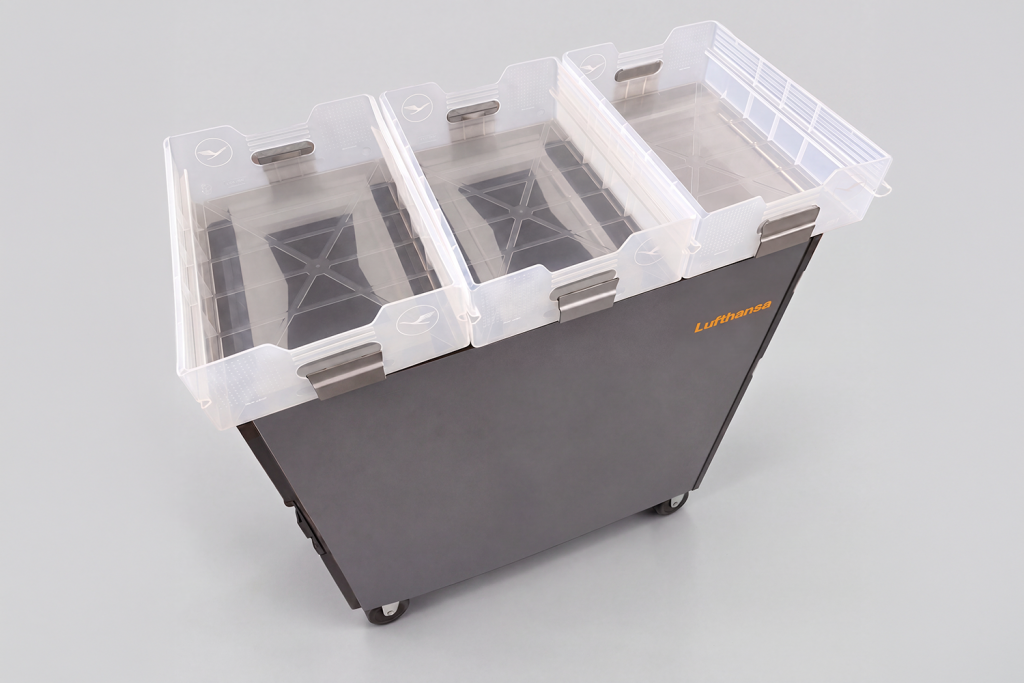
For Lufthansa’s FOX service concept, the objective wasn’t to introduce a new trolley. The challenge was to offer passengers an additional main course without making service more complex for cabin crew.
deSter developed a dedicated drawer attachment that enables three main course options within the existing trolley footprint. By rethinking the internal organization rather than the external equipment, the solution increases flexibility for the crew while creating a richer dining experience for passengers.
When storage becomes part of the experience
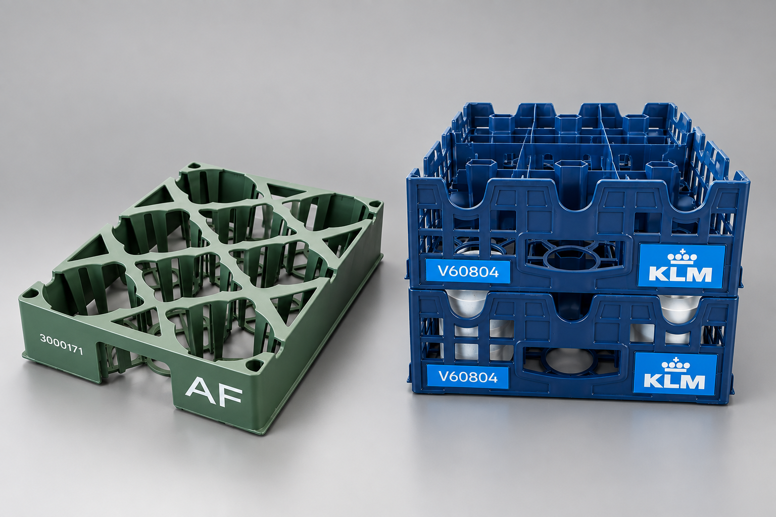
Glassware presents a different challenge. A well-designed glass still needs to survive transport, fit efficiently inside the galley, and remain easily accessible throughout service.
Rather than developing a new storage solution for every glass type, deSter’s modular glass rack system allows airlines to accommodate a wide variety of glass shapes and sizes using existing off-the-shelf components. By selecting and combining the right modules, the configuration can be adapted to different service concepts while protecting fragile glassware and making efficient use of the available space.
Rethinking the busiest moment of service
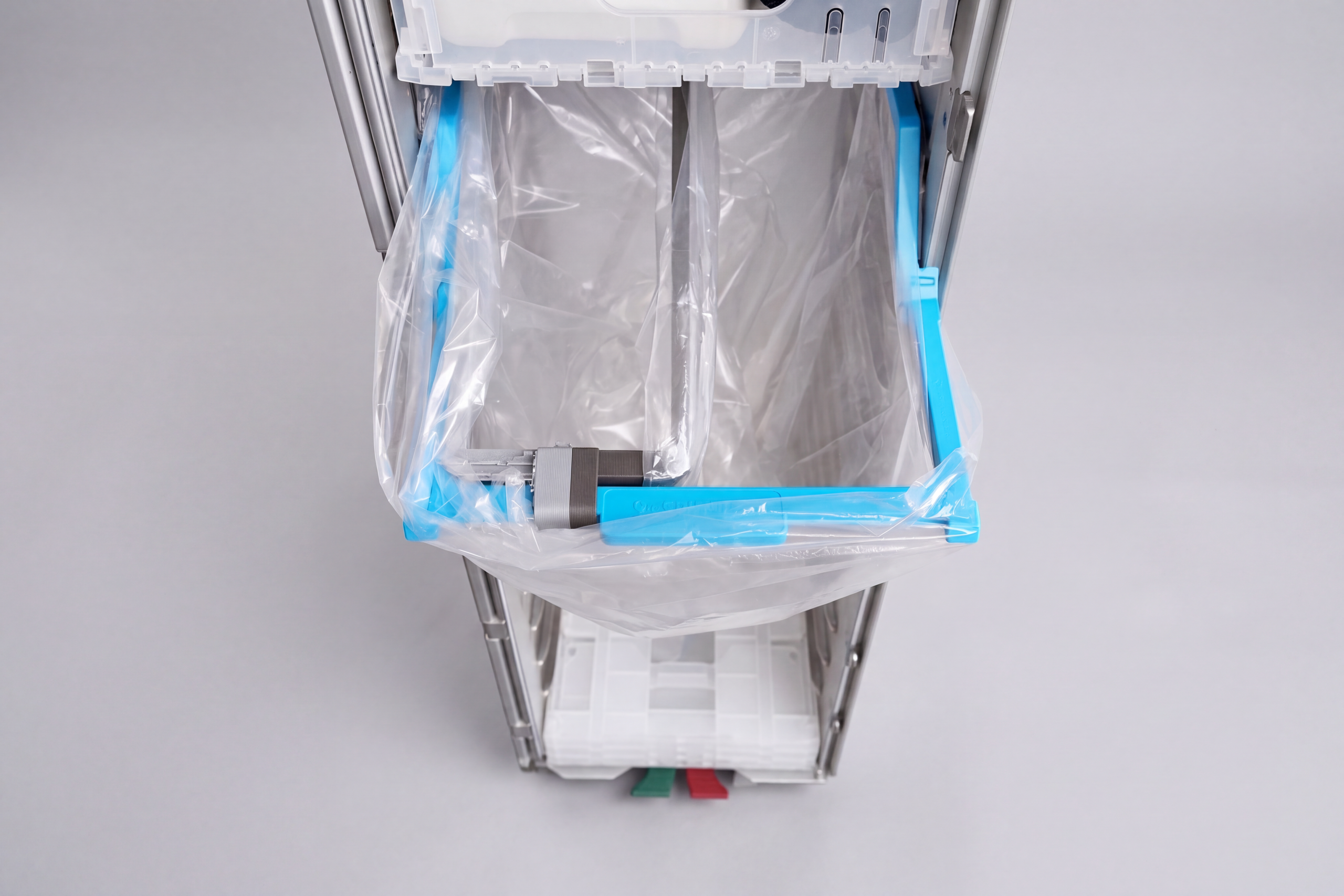
Waste management presents another operational challenge. During service, cabin crew need to handle different types of waste, packaging, and leftover liquids quickly, safely, and hygienically, often within a very limited timeframe.
In several of our projects, dedicated waste management solutions were designed to separate and contain these waste streams directly within the galley equipment. By keeping solids, packaging, and liquids securely segregated, airlines can improve hygiene, reduce unnecessary handling, and make the collection process more efficient for the crew.
What catering operations can teach galley design
Every service trolley begins its journey long before passengers board, with meals prepared, drawers configured and equipment loaded according to each airline’s service concept.
As part of gategroup, deSter benefits from first-hand exposure to airline catering operations. This visibility highlights how small design decisions influence both ground operations and onboard service. A well-organized galley equipment can save time, improve consistency, and support smoother workflows throughout the journey.
The strongest equipment performs across the entire operational journey—not just in the aisle.
Looking beyond the tender
Great cabin service is never created by a single product. Service trolleys, drawers, glassware and waste solutions all interact within the same environment. When designed as one connected system, they can improve crew efficiency, operational consistency and passenger experience.
The future of Crew & Galley Equipment isn’t simply about lighter trolleys or additional storage. It’s about designing smarter solutions that help airlines do more with the space they already have.
Looking to optimize your next cabin service concept? Contact deSter to explore how integrated Crew & Galley Equipment can help improve onboard operations.