
In foodservice, innovation is often associated with what customers can immediately see: striking branding, new menu concepts or eye-catching packaging.
Yet some of the most important design decisions are almost invisible.
Customers rarely notice a lid that closes securely, a cup that feels comfortable in the hand or packaging that stacks efficiently in a busy kitchen. But they quickly notice when these elements fail.
As foodservice operators face growing expectations around convenience, delivery, sustainability and customer experience, invisible design is becoming more important than ever. It is not about making products stand out. It is about making experiences work effortlessly.
Here are three ways invisible design shapes modern foodservice.
1. Great design starts with real-life behavior
Foodservice products are rarely used in ideal conditions.
Customers eat lunch at their desks. They carry takeaway meals on public transport. They walk across event venues with drinks in hand. Online orders may travel several kilometers before reaching their destination.
Designing for these realities means looking beyond the product itself and understanding the entire journey.
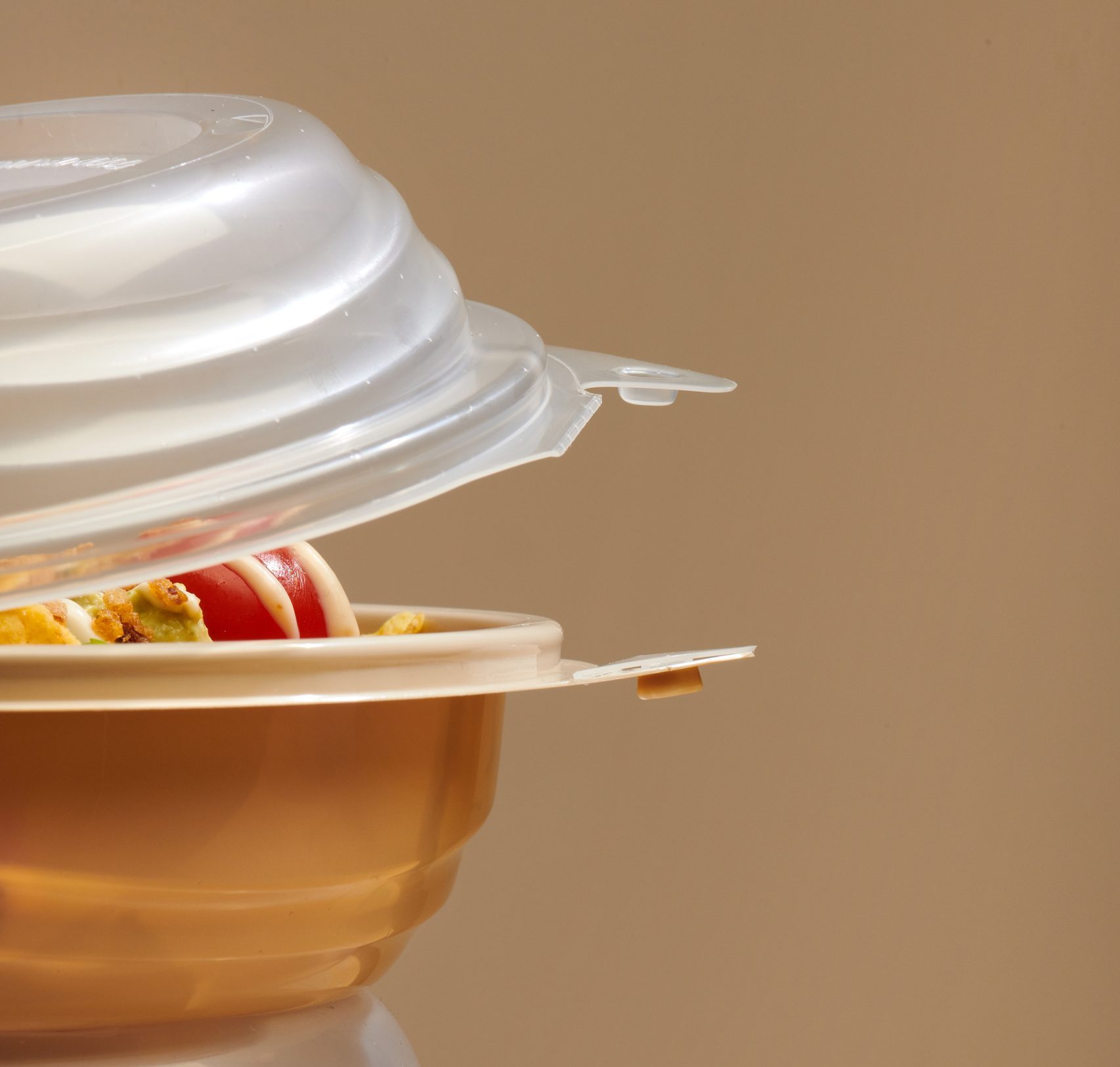
In our experience, some of the most successful foodservice solutions start with a simple question: what happens after the food leaves the counter?
Consider takeaway and delivery applications. The experience does not begin when the customer opens the package. It begins when that package leaves the kitchen. Throughout transport, packaging must help protect food quality, maintain presentation and arrive exactly as intended.
Features such as secure closure systems, venting solutions and tamper-evident elements may seem like small details, but they can influence the overall experience long before the first bite. Our WAVE clamshell collection, for example, was designed with these real-world challenges in mind, helping food travel through more complex foodservice journeys while preserving convenience for both operators and consumers.
Ultimately, great foodservice design begins with an understanding of how people actually consume food, not just how products look on a shelf.
2. Confidence is part of customer experience
Not all customer experiences are emotional. Some are practical.
One of the most overlooked outcomes of good design is confidence.
Customers may not consciously think about packaging performance, but they constantly assess whether a product feels reliable. Will it leak? Is it comfortable to carry? Will it perform as expected?
When the answer is yes, customers stop thinking about the packaging and focus on enjoying the experience.
Reusable beverage solutions are a good example. While color, branding and visual appearance often attract attention, performance is what builds trust. Features such as spill resistance, durability and comfortable handling play a significant role in how customers experience a product, particularly in busy environments such as transport hubs, workplaces, events and hospitality venues.
Our reusable hot cup range was developed around this principle. Visual design is important, but the real value lies in helping people carry and consume beverages with confidence.
In many cases, the best customer experience is the one that removes uncertainty altogether.
3. The best design simplifies complexity
Invisible design is not always about individual products.
Sometimes it is about creating systems that make life easier.
Foodservice operators serve a wide variety of dishes, portion sizes and menu concepts. It may be tempting to select a different packaging solution for every application, but this can quickly create complexity in procurement, storage and operations.
This is where collection-based thinking becomes valuable.

Rather than developing dozens of unrelated products, some packaging systems are designed as connected families that can support multiple applications while maintaining a consistent look and feel.
The BRIQ collection is a good example. Different container sizes and lid options allow operators to accommodate a variety of menu items, from salads and grain bowls to hot meals and desserts, while working within a single packaging system. Customers benefit from a consistent experience, while operators can simplify sourcing, storage and handling.
It is a reminder that good design does not always add complexity. Often, its greatest achievement is removing it.
Invisible design serves operators too
While customers experience the visible outcome, many of the benefits of invisible design happen behind the scenes.
Every day, foodservice teams manage storage, preparation, transport and service. Design decisions that may seem minor from the customer’s perspective can have a significant impact on these daily workflows.
Stackable formats can help maximise storage space. Consistent product systems can simplify inventory management. Intuitive packaging designs can support faster handling during peak service periods.
Customers may interact with a product for a few minutes.
Operators interact with it every day.
This is why successful foodservice solutions rarely result from a single breakthrough innovation. More often, they are the product of many thoughtful design decisions working together to improve both customer and operational experiences.
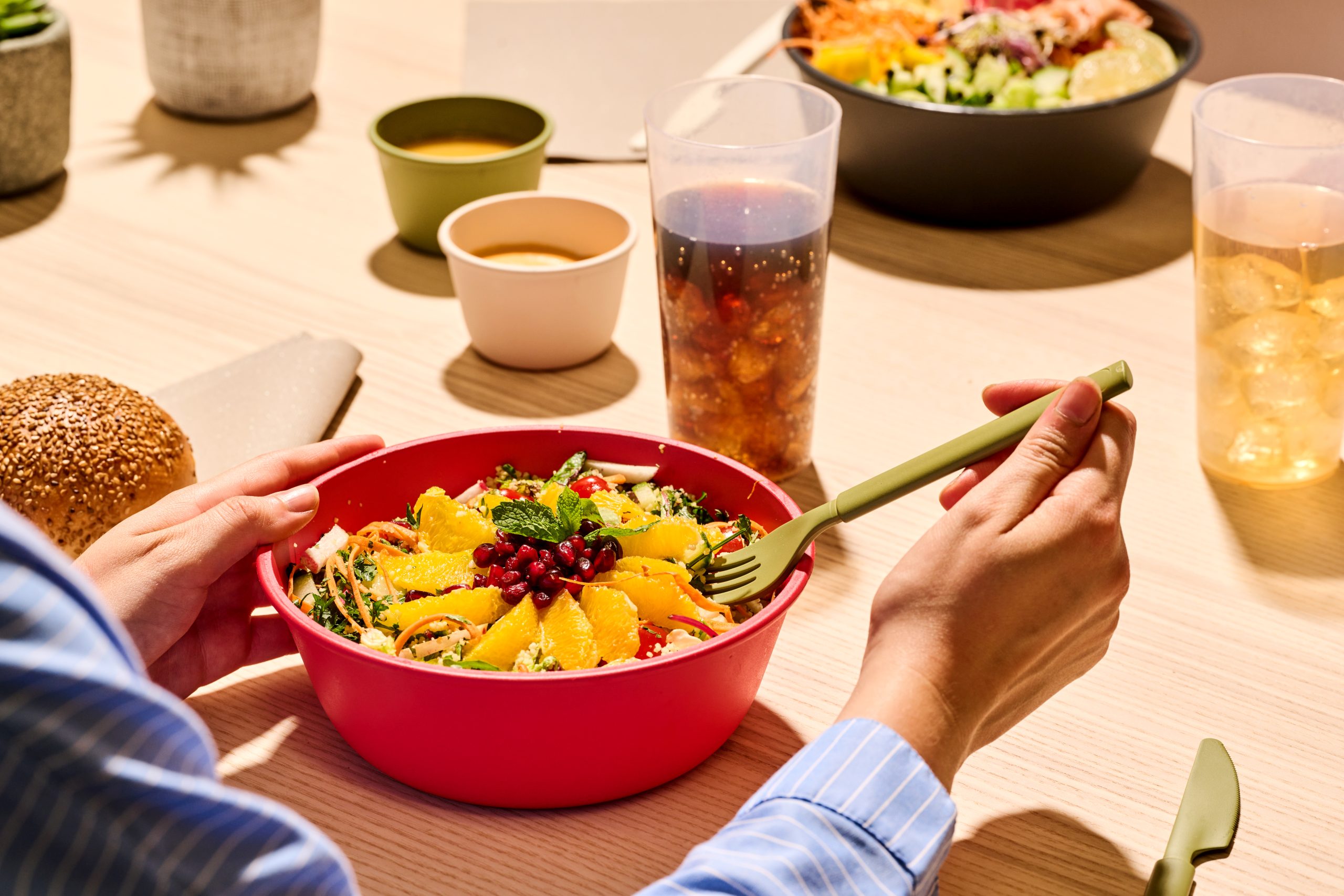
The future of foodservice may be less visible than we think
Foodservice will continue to evolve through new technologies, materials and business models.
But one principle is unlikely to change.
Customers value experiences that feel easy.
Whether they are ordering a meal online, collecting coffee on the go, attending an event or dining in a hospitality environment, they gravitate toward experiences that work without effort.
That is why invisible design matters.
The most successful foodservice experiences are rarely built on a single breakthrough innovation. More often, they are shaped by thoughtful design decisions that support customers, teams and operations at every stage of the journey.
For foodservice operators, the challenge is not simply choosing packaging that looks good. It is choosing solutions that help experiences run smoothly, often in ways customers never consciously notice.
Ready to design better foodservice experiences?
From reusable systems and beverage solutions to takeaway packaging and serviceware, deSter helps foodservice operators create solutions designed for real-world challenges.
Get in touch to discuss your next foodservice project and discover how thoughtful design can improve every stage of the journey.