
For years, the aviation industry has worked to give amenity kits a meaningful life beyond the flight. Pouches became more durable, materials more considered, and designs more functional. Sustainability challenged airlines and suppliers to think beyond something used for a few hours onboard and then discarded.
That evolution was necessary. But today, reusability is increasingly the baseline rather than the destination.
Practically any durable pouch can hold toiletries, cables or cosmetics after the flight. For a frequent traveler, however, one household only needs so many toiletry bags. The more interesting question is no longer simply what passengers can do with an amenity kit after landing, but whether they value it enough to actually take it home.
And this is where amenity kits are changing again. Distinctive designs, collaborations, different colorways, and collections are turning something passengers can reuse into something they want to keep.
Sustainability made the amenity kit reusable. Desirability is making it collectible.
The long journey beyond the flight
Amenity kits started with a straightforward purpose: providing passengers with personal care and comfort essentials during the journey. Over time, particularly in premium cabins, they became much more than containers. Design grew more sophisticated, beauty and lifestyle partnerships gained prominence, and the kit became another physical expression of the airline brand.
Sustainability added another dimension: what happens to the product after the flight?
deSter has explored different answers to that question over the years. In one earlier project, kits left onboard could remain within the airline’s own system. They could be checked and reassembled, replacing used items such as socks or sleep masks while keeping unused components in circulation.
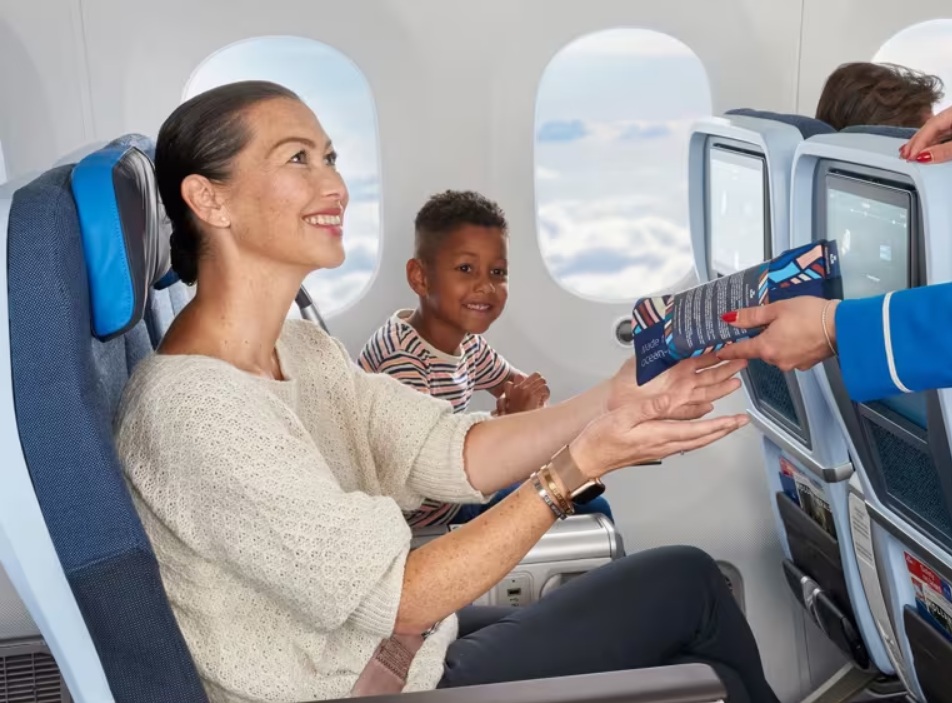
Other solutions deliberately put the next life in the passenger’s hands. For KLM Premium Comfort, deSter developed an amenity bag that could be unfolded and used as a laundry bag after the flight. The design therefore gave passengers a practical reason to keep using it rather than relying only on its durability for repurposing.
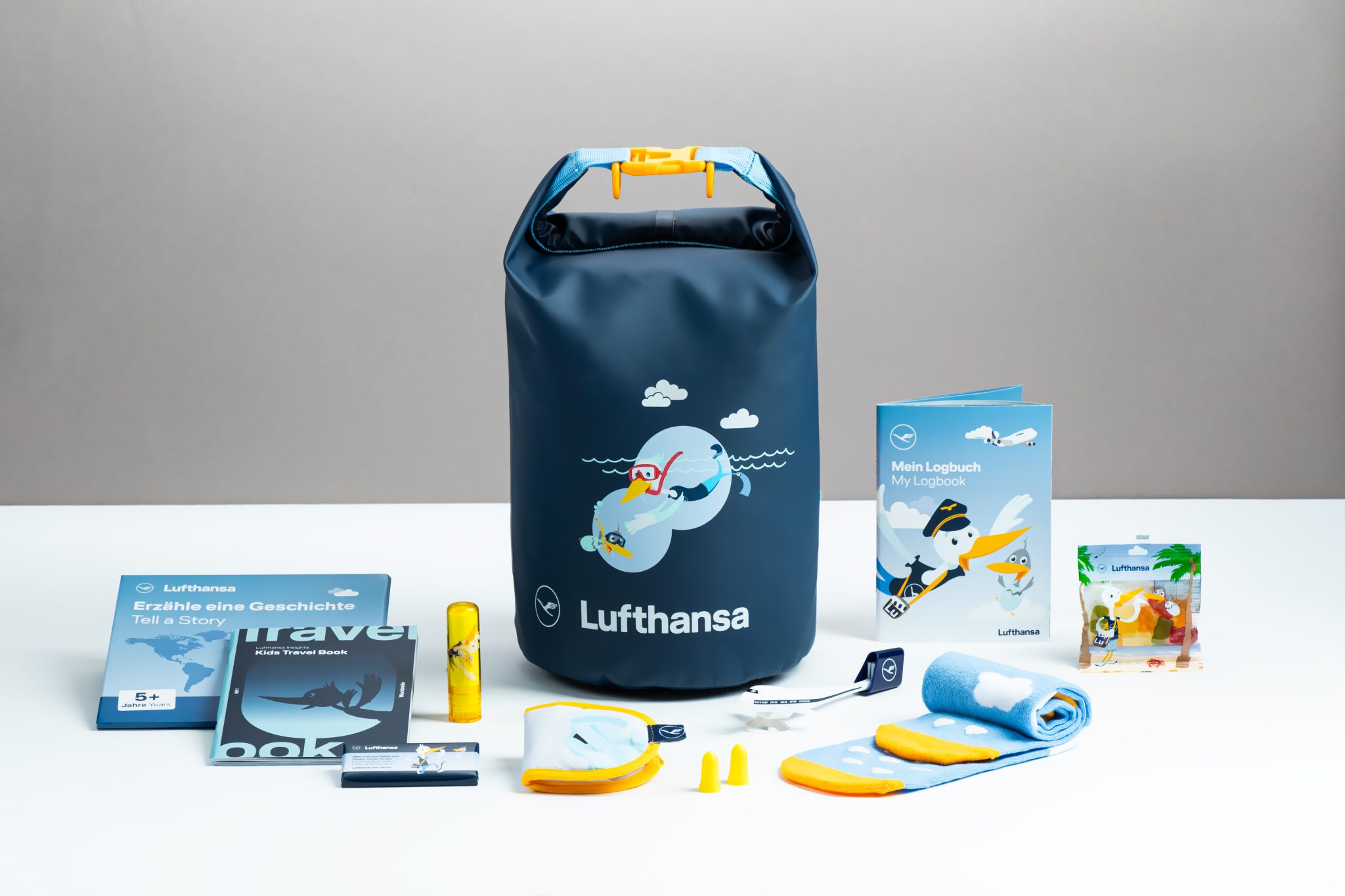
The Lufthansa children’s amenity kit took a different approach. The waterproof dry bag was designed to transform into a backpack, turning the onboard-item packaging into something children could keep using after the journey.
These were meaningful steps forward. The focus had shifted from simply making something last to actively designing what could happen to it next.
From a second use to a reason to keep it
Today, however, practically any well-made amenity bag can claim some form of reuse. That makes the next question more interesting: what makes the passenger actually want to keep it?
Function is one answer, but increasingly it is not the only one. Artwork, craftsmanship, color, cultural references, storytelling, and collaborations can give an amenity kit value beyond its practical purpose.
Recent deSter projects developed together with Nexus demonstrate this direction.
For TUI, the Premium amenity kits combine functionality with destination-inspired storytelling. Destination-linked artwork, including Mexico and Croatia, gives each design its own character, while Rituals products and the link to the TUI Care Foundation add further layers to the concept. Rather than simply offering another reusable pouch, the kit connects to the destination and the wider travel experience.
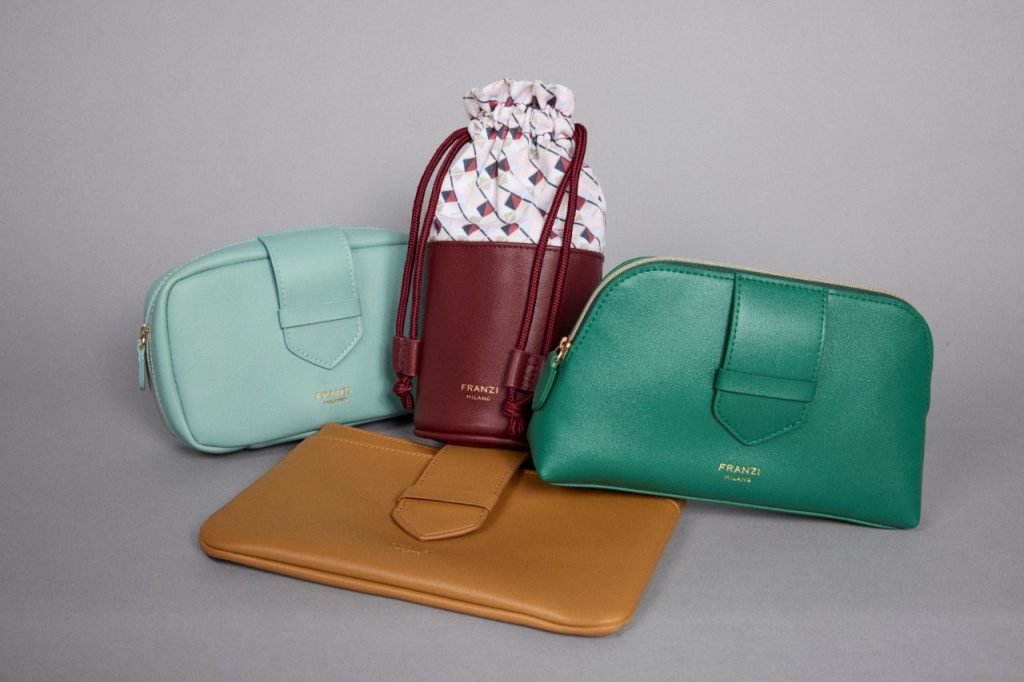
The ANA Business Class amenity kits move further towards collectability. The concept brings ANA’s approach to Japanese hospitality together with Franzi and CULTI MILANO, with pouches appearing in different styles and colors, including seasonal variations. The choice and variation give passengers another reason to engage with the bag itself, not only with the amenities inside.
This represents a subtle but important development. The second life does not always need to be another function. Being valued can itself become part of that second life.
When desirability becomes collectability
This shift is increasingly visible across the wider aviation industry.
Delta Air Lines has taken an explicitly collection-led approach with its Missoni Delta One amenity kits. Its 2026 collection includes five seasonal colorways inspired by destinations such as Cape Town, Malta, Rio, Seoul and Sydney, with further seasonal updates planned. The airline itself describes the limited-edition approach as collectible, bringing the logic of seasonal fashion collections into the cabin.
EVA Air offers another take on the trend through its ongoing collaboration with Hunter. The second Premium Economy collection features reusable crossbody bags in lemon yellow and sky blue, combining a genuinely useful everyday format with changing designs and the recognizable Hunter aesthetic.
What makes this interesting isn’t simply that airlines are introducing more colors.
Variation itself is becoming part of the experience.
Instead of only Here is your amenity kit, there is now an element of:
Which one did I get?
And potentially, on another journey:
Which one will I get next?
That sense of discovery is what begins to turn desirability into collectability.
The sustainability paradox
An interesting contradiction lies in all of this.
Earlier circular approaches could keep an amenity kit within the airline’s own system. If the passenger left it onboard, the airline could potentially replenish it and use it again.
A successful collectible kit encourages almost the opposite behavior.
The passenger takes it.
From the airline’s operational perspective, that individual kit may therefore serve only one passenger on one journey. Another will need to be provided for the next passenger.
But that does not necessarily make the product itself single-use. Its next life has simply moved outside the airline’s system:
Flight → passenger → use / keep / collect
This is also why collectability should not automatically be presented as sustainable. Materials, production, packaging and durability still matter.
At the same time, putting a “reusable” label on something does not guarantee meaningful reuse either.
The challenge is therefore not simply to make an amenity kit capable of lasting. It is to make that continued life likely.
Designed to stay
Sustainability has established an important expectation: an amenity kit should be considered beyond the few hours it spends onboard.
That has not changed.
What is changing is how that life after the flight is being approached. Practical second uses remain valuable. Responsible materials remain essential. But design is adding another layer by creating objects that passengers actively value, seek out and, increasingly, may want in more than one version.
Amenity kits have traveled a long way from simply holding the necessities for a journey. They became expressions of airline brands, then products deliberately designed for a life beyond the aircraft. Collectability is the next step in that evolution.
Practical reuse asks whether passengers can keep using an amenity kit. Collectability gives them a reason to want to.
And perhaps that is the strongest measure of a successful second life: not simply that the product was designed to last, but that someone thinks it is worth keeping.
Ready to create an amenity kit worth keeping? Contact deSter for your next project. Together with our strategic partner Nexus, we can help bring distinctive, thoughtful amenity concepts to life.